Even experienced boaters make avoidable boating mistakes. In fact, after launching thousands of trips, our crew sees the same handful of issues come up again and again — usually small things that snowball into a stressful day.
The good news? Most of them are easy to correct with a few smart habits.
Here’s what our team sees most often on the docks, and how to stay a step ahead of each boating mistake!
1. Navigating Inlets at the Wrong Tide
If there’s one mistake that can turn a good day into a rough one fast, it’s choosing the wrong time to run the inlet.
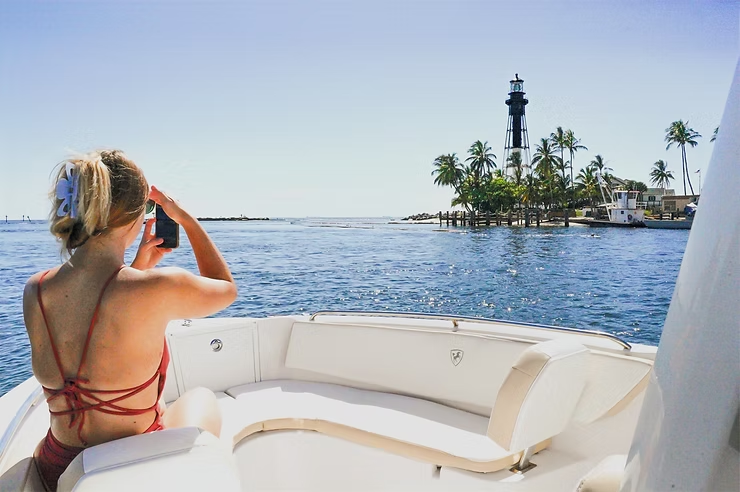
Florida inlets have personalities — some get choppy on an outgoing tide, some stack up in east wind, and some (like Jupiter or Hillsboro) can shift from calm to uncomfortable in minutes.
How to avoid it:
-
Check tide timing before you book and again before you leave.
-
The smoothest windows are usually incoming tide + light wind.
-
If wind and tide oppose each other, expect steep chop.
-
When in doubt, ask the dock crew. We check inlet conditions every morning — and we can tell you exactly what to expect.
A well-timed inlet run is the difference between a smooth cruise and a bumpy start.
2. Anchoring Mistakes That Make Everything Harder
Anchoring looks simple, but small mistakes can lead to dragging, drifting, or a boat that never quite sits right. The most common issues we see are:
-
Dropping anchor over grass or rock
-
Not letting out enough scope
-
Anchoring in strong current or wind without compensating for it
-
Not giving the anchor time to set
How to avoid it:
-
Look for sand patches — anchors hold best there.
-
Let out enough rope for a solid set (5:1 scope minimum in calm water).
-
Back down gently to let the anchor dig in.
-
Watch how nearby boats are sitting; they tell you everything about wind and current.
A strong anchor set makes the entire day easier — especially at the sandbar.
3. Overpacking vs. Underpacking
Members tend to fall into one of two camps:
Team Bring Everything or Team Forgot Everything.
Overpackers fill the deck with coolers, bags, blankets, and items no one touches. Underpackers forget sunscreen, towels, or even water.
Neither approach works well.
How to avoid it:
Use this simple rule:
Pack what you’ll use in the first three hours.
That’s it.
Our crew’s suggestions:
-
One cooler (with layers — cold on bottom, snacks on top)
-
A small bag for essentials
-
A second bag left in the car for “just in case” items
It keeps the boat tidy and the day stress-free.
4. Forgetting the Small but Important Items
It’s never the big things people forget — it’s the tiny ones that matter most.
We see it all the time:
-
Phone chargers
-
Hats
-
Towels
-
Reusable ice packs
-
A dry bag
-
Extra water
None of these feel urgent until you’re miles from the dock.
How to avoid it:
Build a simple permanent boat bag with all the small essentials. Leave it packed, and just grab it every time you go out.
One habit, zero stress.
5. How GBC Prep Eliminates Half the Stress Before You Even Arrive
The biggest mistake boaters make? Trying to do everything themselves.
Fueling, cleaning, safety checks, weather reviews, mechanical inspections — these are things that can eat up your morning or derail your plans entirely.
At Gulf Stream, that’s the part we handle for you.
Here’s what’s already done when you arrive:
-
Fuel topped off
-
Engines checked
-
Safety gear loaded
-
Weather and inlet conditions reviewed
-
The boat cleaned, prepped, and ready for boarding
The time you would have spent prepping is spent cruising instead.
⭐️ Boating Like a Pro Comes Down to Habits, Not Experience
You don’t need decades on the water to boat confidently — just a few smart habits and a crew that’s got your back.
Avoid the common mistakes, trust the prep, and enjoy the reason you’re here in the first place:
a smooth, easy day on the water.