A great day on the water starts with a little planning. Whether you’re looking forward to a relaxing afternoon cruise, exploring a new destination, or spending the day with family and friends, understanding the marine weather forecast can help you make the most of your boating experience.
If you’ve ever opened a marine weather forecast and wondered what wind speeds, wave heights, gusts, and other boating terms actually mean, you’re not alone. These forecasts provide helpful information, but knowing how to interpret them can make planning your day much easier.
The good news is that checking the marine forecast doesn’t have to be complicated. With a basic understanding of a few key details, you can feel more confident choosing when and where to go.
And at Gulf Stream Boat Club, you don’t have to figure everything out on your own. Our team is here to help members understand local boating conditions, recommend destinations that may offer more protection from the wind, and make the most of their time on the water.
Here’s what to look for when checking a marine weather forecast before your next boating adventure.
1. Start With the Marine Forecast, Not Just the Daily Weather
One of the easiest things to overlook when planning a boating trip is the difference between a regular weather forecast and a marine weather forecast.
Your phone might show sunshine, warm temperatures, and very little chance of rain, but conditions on the water can be different from what you’re experiencing on land.
A marine weather forecast provides information specifically for boating areas, including:
- Wind speed and direction
- Wind gusts
- Wave and sea heights
- Wave direction and period
- Thunderstorm potential
- Visibility
- Marine weather advisories and warnings
These details help paint a better picture of what you can expect while boating.
Before heading out, look for a marine forecast that covers the specific waters where you plan to spend your day. The National Weather Service (NWS) provides forecasts for coastal waters, inland waterways, and other designated marine zones.
It’s also worth remembering that not every boating destination experiences the same conditions. Depending on the wind direction and surrounding geography, certain bays, waterways, and protected areas may offer a more comfortable ride than open water.
If you’re unsure where to go, our Gulf Stream team can help you explore your options and identify destinations that may be better suited to the day’s conditions.
2. Understand Wind Speed and Direction
Wind is one of the most useful things to check when reading a marine weather forecast. It can influence how a boat handles, how the water feels, and which destinations might be most comfortable for your outing.
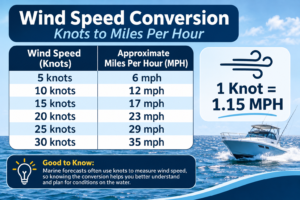
Marine forecasts typically measure wind speed in knots rather than miles per hour.
Here’s a quick reference:
What does wind direction mean?
Wind direction describes where the wind is coming from, not where it is going.
For example, a northeast wind blows from the northeast toward the southwest. Depending on the waterway and your planned route, this direction can influence whether the water feels relatively calm or becomes choppier.
This is where knowing your local waterways can make a difference. Some destinations are naturally more sheltered because of their surrounding geography, while others are more exposed to wind.
A destination that feels comfortable on one day may be less appealing when the wind shifts.
When checking wind conditions, look at both the speed and direction. If you’re not sure how they might affect your plans, ask our team for guidance on destinations that may offer more protected boating conditions.
3. Pay Attention to Wind Gusts
Along with sustained wind speed, marine forecasts also provide information about wind gusts.
A forecast might call for sustained winds of 10 to 15 knots with gusts reaching 20 knots. This means the general wind is expected to remain within the forecast range, but stronger bursts may occur.
Gusts are worth considering because they can affect how the boat feels, particularly when navigating narrow waterways, approaching docks, or maneuvering through an inlet.
A few things to remember:
- Sustained wind speed gives you an idea of the general conditions.
- Gusts indicate the possibility of stronger, short-lived bursts.
- A noticeable difference between sustained winds and gusts means conditions may feel less consistent.
Looking at both numbers gives you a more complete picture of what to expect.
And remember, you don’t need to interpret every forecast on your own. Our team can help you understand the conditions and discuss whether your planned destination makes sense for the day.
4. Know What Wave Height and Wave Period Mean
Wind isn’t the only factor that influences how comfortable your time on the water will be. Wave height and wave period are also useful details to understand.
Wave height
Wave height is typically measured in feet and describes the vertical distance between a wave’s crest and trough.
For example, a forecast showing seas of 2 to 3 feet means the significant wave height is expected to fall within that range.
It’s important to remember that this doesn’t mean every wave will be between 2 and 3 feet. The National Weather Service defines significant wave height as the average height of the highest one-third of waves, meaning individual waves can be larger.
Wave period
Wave period measures the amount of time, in seconds, between successive wave crests passing the same point.
This matters because two forecasts showing the same wave height can describe very different conditions.
- Longer wave periods generally mean waves are more widely spaced.
- Shorter wave periods can indicate closely spaced, steeper, and choppier conditions.
For example, 3-foot waves with a shorter period may feel much rougher than 3-foot waves that are more widely spaced.
When reviewing a marine forecast, consider wave height and wave period together.
You can also explore Gulf Stream’s boat fleet to learn more about the variety of vessels available to members for different boating experiences.
5. Understand Marine Weather Advisories
Marine weather forecasts sometimes include advisories and warnings to help boaters understand when conditions may require additional attention.
These alerts are simply another way to stay informed and plan accordingly.
Here are a few common terms you’ll encounter:
Small Craft Advisory
A Small Craft Advisory indicates that wind or sea conditions may be hazardous for smaller vessels. The exact criteria vary by region and local marine conditions.
Gale Warning
A Gale Warning indicates sustained winds or frequent gusts of 34 to 47 knots are expected or occurring.
Storm Warning
A Storm Warning indicates sustained winds or frequent gusts of 48 to 63 knots are expected or occurring.
Hurricane Force Wind Warning
This warning indicates sustained winds or frequent gusts of 64 knots or greater.
If an advisory or warning is issued for your boating area, take it seriously and follow official guidance. Depending on the conditions, postponing your outing may be the best choice.
Staying informed allows you to make thoughtful decisions and enjoy boating when conditions are appropriate.
6. Keep an Eye on Thunderstorms and Changing Weather
Florida is known for its beautiful boating weather, but conditions can change throughout the day, particularly during warmer months when afternoon thunderstorms are common.
Before heading out, take a look at the forecast for the entire day rather than just the time you plan to leave.
A few things worth checking include:
- Thunderstorm forecasts throughout the day
- Severe thunderstorm watches and warnings
- Lightning activity
- Changes in wind direction or speed
- Visibility and expected rainfall
Thunderstorms can bring stronger winds, lightning, and heavy rainfall, so it’s important to take them into consideration when planning your outing.
If storms are expected, consider adjusting your plans or choosing another day. Always follow official weather alerts and return to a safe location if conditions begin to deteriorate.
A little flexibility can go a long way toward making your boating experience more enjoyable.
7. Check the Forecast Throughout the Day
Checking the weather before leaving the dock is a great habit, but it’s also helpful to stay informed as the day progresses.
A simple boating routine can include:
The day before your trip
Take a look at the overall forecast, wind conditions, wave heights, and any expected weather changes.
Before leaving the dock
Review the latest marine forecast, active advisories, and any updates to wind or wave conditions.
While you’re on the water
Continue paying attention to the weather, wind shifts, visibility, and surrounding water conditions. Keep up with available marine weather updates.
Before heading back
Consider what conditions may look like during your return trip. Wind and waves that feel manageable in one direction can become more challenging when traveling back.
Planning for the entire outing helps you make more informed decisions and enjoy a more comfortable day.
8. Use Reliable Marine Weather Resources
Knowing where to find marine weather information makes planning your boating day much easier.
A few reliable resources include:
National Weather Service (NWS)
The National Weather Service provides official marine forecasts, coastal weather advisories, and marine warnings for boating areas throughout the United States.
NOAA Marine Weather
NOAA offers marine weather information, including forecasts, observations, and alerts to help boaters understand current and upcoming conditions.
NOAA Weather Radio
Weather radio broadcasts provide continuous weather information and important alerts for marine areas. A marine VHF radio is also an important communication tool when spending time on the water.
Marine Weather Apps
Weather apps can make it easier to review wind, waves, precipitation, and changing conditions. Look for apps that provide marine-specific forecasts rather than relying exclusively on general weather information.
For the most informed picture, compare forecast information with current observations and official alerts.
9. Let Local Knowledge Help You Plan Your Day
Understanding a marine weather forecast is an important part of boating, but knowing how local conditions affect different waterways can make planning your day even easier.
Wind direction, surrounding land, inlets, and waterways can all influence how a particular destination feels on any given day. Some areas naturally offer more protection from certain wind directions, making them worth considering when planning a more relaxed outing.
Not sure where to go? That’s what we’re here for.
At Gulf Stream Boat Club, our team can help you better understand the day’s weather conditions and recommend boating destinations that may offer more protection from the wind. Depending on wind direction and local conditions, certain waterways, bays, and protected areas may provide a more comfortable experience.
Whether you’re looking for a quiet cruise, a family-friendly afternoon, or somewhere new to explore, we’re happy to help you consider your options and plan your day.
You don’t have to figure out the weather or choose your destination on your own. A little local knowledge can go a long way toward helping you feel more confident and enjoy your time on the water.
And if conditions aren’t suitable for your plans, there’s always another opportunity to get out on the water.
Enjoy More Time on the Water With Gulf Stream Boat Club
A great boating experience is about more than choosing the right boat. It’s about knowing where to go, making the most of the conditions, and feeling comfortable throughout your time on the water.
At Gulf Stream Boat Club, members enjoy access to a fleet of well-maintained boats across multiple boating destinations, without the responsibilities that come with traditional boat ownership.
Our team is here to help you make the most of your membership, from understanding local boating conditions to recommending destinations that may be better suited to the day’s weather.
Whether you’re planning a family cruise, an afternoon with friends, or a full day exploring your favorite waterways, we’re here to help make getting out on the water easier.
If you’re weighing the benefits of membership against owning a boat, read our guide to Boat Club Membership vs. Boat Ownership to see how the two experiences compare.
Ready to spend more time on the water?
Explore Gulf Stream Boat Club’s membership plans and find the option that fits your boating lifestyle.