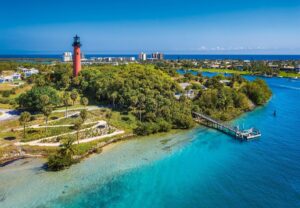
At Gulf Stream Boat Club, we know the best memories are made when the engine is off and the kids are finally in the water. However, a relaxing day can quickly turn stressful if you’re constantly worried about current, depth, or boat traffic. To help you enjoy your membership to the fullest, our crew has put together this guide to safe swim with kids. Whether you’re launching from our original docks in Delray Beach or exploring our newest spots in Tampa Bay, here is how to set up like a pro.
1. Scouting the Spot: Best Anchor Depths for Safe Swim
When you have kids on board, “shallow” is your best friend—but only if it’s the right kind of shallow.
-
The Sweet Spot: Look for depths between 3 and 4 feet. This allows adults to stand comfortably while kids use flotation devices or practice swimming without being over their heads.
-
The Bottom Matters: Try to anchor over clean sand. Avoid murky areas or heavy seagrass where “critters” like to hide.
-
Tide Awareness: In places like the Jupiter Sandbar or Peanut Island, the tide moves fast. A spot that is 3 feet deep at noon might be over their heads by 2:00 PM. Always check the tide charts provided by the GBC staff before you head out.
2. Positioning for Safety: Ladders & Shade
How you park the boat is just as important as where you park it.
-
The “Downwind” Rule: Always anchor so the back of the boat (the swim platform) is facing away from the wind. This prevents the boat from drifting over the kids and keeps exhaust fumes away from the swimmers.
-
Ladder Logic: Ensure the ladder is fully deployed and locked before anyone jumps in.
-
Create a “Cool Zone”: Position the boat so the Bimini top casts a shadow over the swim platform. Kids get exhausted faster in direct sun; having a shaded place to sit on the back of the boat between swims is a game-changer.
3. Reading the Water: Red-Flag Indicators
Before you let the kids jump, do a 60-second “weather check.”
-
Wind & Chop: If the water is white-capping or the boat is “hobby-horsing” (rocking aggressively), it’s not a swim day. High chop makes the ladder dangerous for small limbs.
-
The “Stick Test” for Current: Toss a small piece of biodegradable scrap (like an orange peel) into the water. If it zips away from the boat, the current is too strong for kids.
-
Proximity: If you’re near a high-traffic channel, move further away from the markers. Wake from passing boats can slam swimmers into the hull.
4. GBC Member Resource: Safe Swim Kid-Friendly Zones by Location
Each of our Club locations has a “hidden gem” perfect for families. Here is where the crew recommends you drop anchor:
| Club Location | Recommended Kid-Friendly Swim Zone | Why it’s great |
| Palm Beach Gardens | Munyon Island / Peanut Island | Shallow sandbars and protected lagoons with very little current. |
| Jupiter | Cato’s Bridge / Loxahatchee River | Crystal clear water for snorkeling and spotting starfish. |
| Hypoluxo & Boynton | Beer Can Island | A laid-back sandbar just north of the inlet with soft sand. |
| Delray Beach | Lake Boca | A social, shallow “lake” environment that’s perfect for floating mats. |
| Lighthouse Point | Hillsboro Inlet / Lake Boca | Scenic views and calm Intracoastal pockets for easy swimming. |
| Tampa / Tierra Verde | Shell Key / Egmont Key | Untouched white sand and shallow Gulf waters that feel like a private pool. |
5. Must-Have Gear for the Resourceful Parent
Pack these to ensure the day ends with smiles, not tears:
-
Bright Rash Guards: Skip blue or green swimwear. Neon orange or pink makes kids much easier to see from the helm.
-
Floating Mats (Lily Pads): A GBC favorite. It keeps the kids corralled and provides a “base camp” in the water.
-
Ear Protection/Drying Drops: Prevent “Swimmer’s Ear” by drying ears thoroughly after the final dip.
-
The “Dry-Off” Station: Keep a basket of dry towels and a fresh change of clothes in the cabin or a dry locker so they don’t get chilled on the ride back to the Club.
6. The Crew’s Recommended “Kid Swim Zone” Setup
-
The Safe Entry: One adult stays on the swim platform at all times to assist with the ladder.
-
The Perimeter: Use a floating mat attached to the stern to create a safety zone.
-
The Spotter: One adult remains on the boat (the “Lifeguard”) while another is in the water. Never leave the helm unattended.